Blog

  • The Larder of London: Hay’s Galleria

    The Larder of London: Hay’s Galleria

    Nestled along the south bank of the River Thames, Hay’s Galleria is one of London’s hidden treasures, blending history, architecture, and modern charm. Once a bustling Victorian warehouse and dock, it has been transformed into a vibrant destination, offering a unique mix of shopping, dining, and culture right in the heart of the city. Known as the “Larder of London” in its heyday, this iconic riverside location has a rich story that reflects London’s maritime and trading history.

    A Historical Hub of Trade

    Hay’s Galleria’s story begins in the 17th century, when the site served as a wharf for ships unloading goods such as tea, sugar, and produce from across the British Empire. It gained its nickname, “The Larder of London,” due to the vast quantities of foodstuffs that passed through its docks, destined for the markets and shops of London. By the mid-19th century, it was transformed into Hay’s Wharf, a grand warehouse complex designed to handle the influx of goods arriving by ship. At its peak, Hay’s Wharf was the main entry point for provisions supplying the growing city of London.

    The Galleria played a vital role in feeding Londoners, with the docks bustling with activity as ships arrived to unload their valuable cargo. As a symbol of the city’s global trade connections, it helped establish London as one of the world’s leading commercial centers.

    Architectural Beauty with a Maritime Legacy

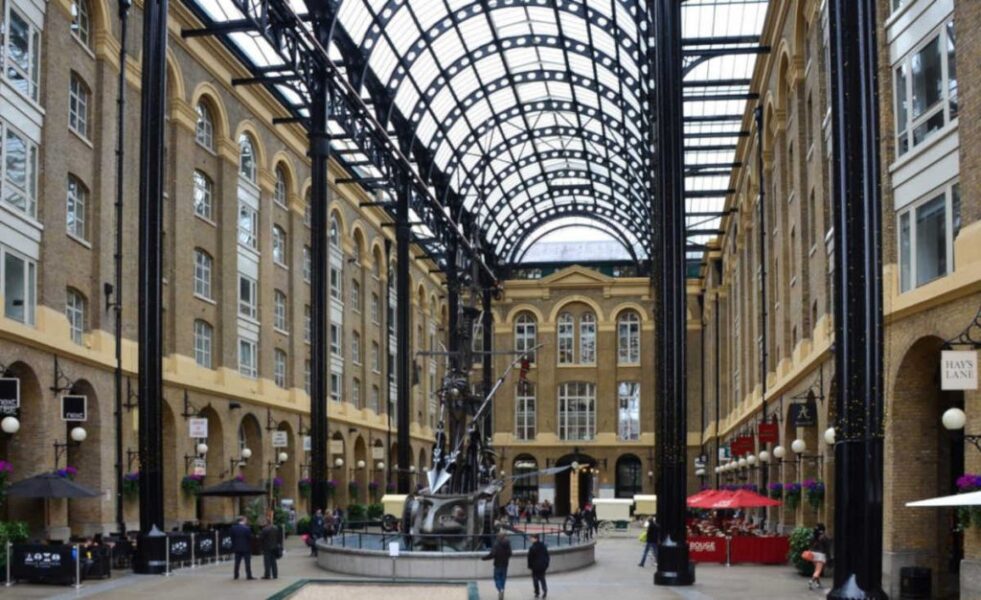
    Although the cargo ships no longer dock at Hay’s Wharf, the area has retained its maritime charm. The Galleria underwent a major redevelopment in the 1980s, transforming the old warehouses into a striking public space while preserving its historical roots. The most eye-catching feature is the stunning glass and steel arched roof that now covers the former dockyard, creating a grand atrium that brings in natural light and adds a sense of openness.

    In the center of this grand atrium is one of the Galleria’s most famous features: “The Navigators”, an enormous bronze sculpture by artist David Kemp. This kinetic sculpture, with its tall mast and intricate moving parts, is a tribute to London’s seafaring history and the ships that once sailed through these waters. Surrounded by the architecture of a bygone era, this mix of old and new brings the Galleria to life as both a historical monument and a modern hub.

    A Destination for Dining, Shopping, and Culture

    Today, Hay’s Galleria has reinvented itself as a lively destination, attracting locals, tourists, and workers alike. Its riverside location, with views of Tower Bridge and the Shard, makes it an ideal spot for those looking to experience London’s history while enjoying a range of modern amenities.

    The Galleria is home to a variety of shops, cafes, and restaurants, offering everything from quick bites to fine dining. Whether you’re stopping by for a leisurely brunch, grabbing a coffee, or enjoying a riverside dinner with a view, Hay’s Galleria has something for every taste. With its vibrant mix of eateries, it has become a popular spot for foodies looking to explore a variety of flavors, making it a contemporary “larder” of sorts for modern Londoners.

    In addition to food and drink, Hay’s Galleria also hosts a range of seasonal events, markets, and exhibitions, making it a cultural hub in the heart of the city. Its blend of historical significance and modern appeal creates an inviting atmosphere for both casual visits and special occasions.

    Discover Hay’s Galleria

    Whether you’re a history buff, a food lover, or simply in search of a picturesque spot along the Thames, Hay’s Galleria offers a unique slice of London life. It’s a place where the city’s rich maritime past meets the vibrancy of modern-day London, providing a perfect backdrop for shopping, dining, and cultural experiences.

    Next time you’re strolling along the South Bank, take a moment to step into Hay’s Galleria, and immerse yourself in a space that has evolved from being the “Larder of London” to a contemporary urban gem, celebrating both its storied past and its dynamic present.
  • A Piece of London’s Watery Heritage

    A Piece of London’s Watery Heritage

    Historic Drinking Fountain Restored to Life Near Great Ormond Street Hospital: A Symbol of London’s Watery Past

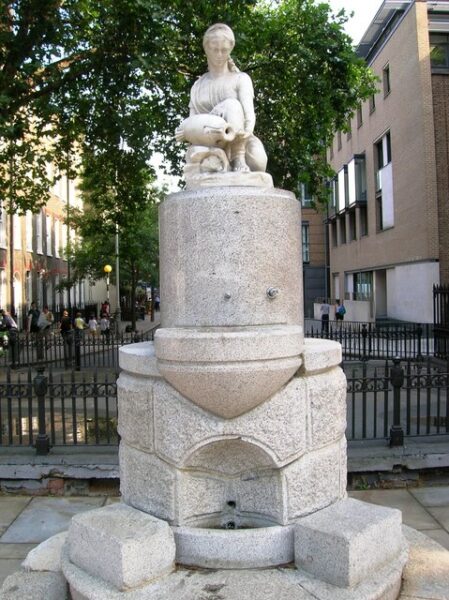
    In the heart of London, a forgotten treasure has been brought back to life. The Guilford Place drinking fountain, first erected over 150 years ago near Great Ormond Street Hospital, has been beautifully restored to working order. Installed in 1870 to honor Francis Whiting, a local resident, this iconic structure once again flows with fresh water, offering refreshment to passers-by and preserving a piece of London’s rich history.

    Designed by Henry Darbishire, a renowned Victorian architect known for his philanthropic projects, the fountain is a striking example of the decorative drinking fountains that began appearing across the city in the mid-19th century. The centerpiece of the fountain is a marble figure of the ‘Woman of Samaria,’ a biblical reference to the story of Jesus meeting a Samaritan woman at a well. The symbolic nature of the sculpture—a woman offering water—beautifully ties into the function of the fountain itself.

    A Piece of London’s Watery Heritage

    The fountain stands at the top of Lamb’s Conduit Street, named after a Tudor-era water conduit that once supplied fresh water to the area. London’s relationship with water has deep roots, and public drinking fountains have played an important role in that history. In the 19th century, public access to clean water was limited, and waterborne diseases were rampant. To combat this, organizations such as the Metropolitan Free Drinking Fountain Association, founded in 1859, began installing fountains across the city to provide safe drinking water for all. The Guilford Place fountain, installed in 1870, was part of this movement.

    Public drinking fountains became a symbol of health, philanthropy, and public welfare, offering a clean alternative to the often polluted water sources of the time. Many of these fountains were elaborately designed, blending artistic craftsmanship with practical utility. The Guilford Place fountain, with its graceful marble sculpture and elegant design, is a prime example of this tradition.

    Restoration of the Guilford Place Fountain

    Despite surviving the bombings of World War II, the fountain fell into disrepair in the late 1990s. Its marble statue was damaged, the stone steps crumbled, and the water supply was switched off. However, after years of neglect, a £17,000 restoration project led by the Heritage of London Trust has revived this piece of history. The restoration included repairing the stonework, replacing the marble jug handle held by the ‘Woman of Samaria,’ and reinstating the plumbing to bring the fountain back to life. The project was inspired by a recent survey in which 78% of passers-by said they would use the fountain if it were restored.

    Now fully operational, the fountain once again serves its original purpose—providing water to the public and even to dogs, with the addition of a dog bowl at the base.

    A Tour of London’s Historic Water Fountains

    London is home to many other historic drinking fountains, each with its own story. Some notable examples include:

    1. The Victoria Embankment Fountain – Located along the Thames, this fountain is an iconic part of the embankment and offers stunning views of the river.
    2. The Diana Memorial Fountain in Hyde Park – This contemporary design, opened in 2004, was built in memory of Princess Diana and encourages visitors to interact with the water.
    3. The Samuel Gurney Memorial Fountain in Holborn – Built in 1867, this ornate fountain was dedicated to the Quaker philanthropist and remains a testament to Victorian charity.
    4. The Archibald Fountain in Regent’s Park – This elegant fountain is a focal point in one of London’s most famous green spaces.

    Across the city, from grand parks to quiet streets, these fountains tell the story of London’s long-standing relationship with water and public health.

    Preserving London’s Water Legacy

    The restoration of the Guilford Place fountain is part of a larger initiative by the Heritage of London Trust, which has now restored 13 historic fountains across the city. These efforts not only preserve beautiful architectural works but also highlight the importance of accessible, clean water in urban spaces. As London continues to grow, these fountains stand as reminders of the city’s commitment to public health and its deep-rooted connection to water.

    Next time you’re wandering through the city, keep an eye out for these remarkable monuments—they’re not just historical artifacts, but functional pieces of London’s living history, ready to refresh the next thirsty traveler.

  • London’s First King Charles III Bollards

    London’s First King Charles III Bollards

    A Brief History of London’s Bollards: Marking the Reign of King Charles III

    Bollards, those small but sturdy posts scattered across London’s streets, might seem like insignificant urban features at first glance. However, they carry a deep history and are often symbols of the reign during which they were installed. Now, London has welcomed its first King Charles III bollards, marking a new chapter in this centuries-old tradition. The latest additions can be found near Regent’s Park, installed by the Crown Estate Paving Commission (CEPC), continuing a legacy that blends practical utility with royal symbolism.

    The Origins of London’s Bollards

    Bollards have been part of London’s street furniture for over two centuries, serving a variety of purposes, from controlling traffic to protecting pedestrians. Their design evolved from repurposed ship cannons, which were embedded in the ground, muzzle-side up, in the early 19th century. These were used to prevent horse-drawn carriages and later, motor vehicles, from mounting the pavements and damaging street infrastructure.

    Over time, bollards became more than just functional objects—they also took on a ceremonial and aesthetic role. By the Victorian era, many bollards were adorned with royal symbols, representing the reigning monarch and the time period in which they were installed. As you walk around London today, you’ll notice bollards bearing the initials “VR” for Queen Victoria, “GR” for King George, and “QEII” for Queen Elizabeth II.

    London’s First King Charles III Bollards

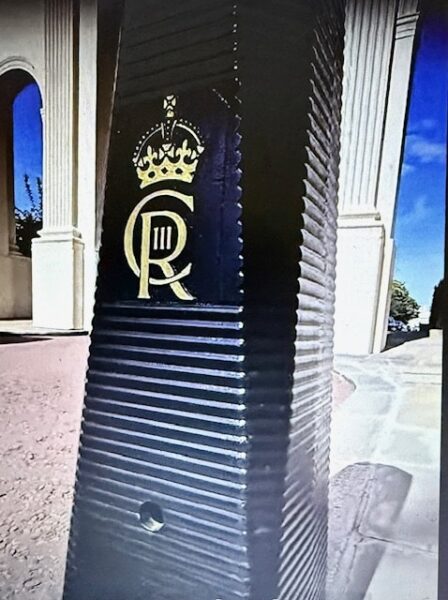
    As of September 2024, the first bollards bearing the royal cipher of King Charles III have appeared in London, symbolizing the beginning of a new reign. These CRIII bollards have been installed on a side street near Chester Terrace in Regent’s Park, one of the city’s most prestigious neighborhoods. This particular installation was carried out by the CEPC, which has maintained this area for over 200 years and is responsible for preserving the historic elegance of the streets, pavements, and gardens around the park.

    The new CRIII bollards were installed not merely for decorative purposes but to prevent vehicles from damaging the York stone paving. These bollards are among the first of their kind, and due to the CEPC’s careful approach to urban design, they are expected to remain rare. Bollards are only installed when absolutely necessary, and damaged bollards are usually repaired or replaced with the original cipher, rather than updated to reflect the current monarch.

    A Legacy of Royal Bollards Around Regent’s Park

    The streets surrounding Regent’s Park are lined with beautiful Regency-style homes and equally grand street furniture, including these iconic bollards. Each one reflects the monarch on the throne when it was installed, creating a timeline of British royalty scattered along the pavements. Visitors to the area will see a variety of ciphers, including QEII for Queen Elizabeth II, VR for Queen Victoria, and even some W IV for King William IV.

    Now, the new CRIII bollards have joined the ranks, offering a subtle but historic marker of King Charles III’s reign. The bollards were crafted by Maybrey Reliance, a metal foundry located in Aylesford, Kent, just outside Maidstone, and installed in July 2024.

    Preserving London’s Street Furniture Heritage

    The installation of these new bollards is part of the CEPC’s broader mission to preserve and maintain the historic streetscape around Regent’s Park. In addition to bollards, the CEPC also looks after London’s historic lamp columns, some of which are among the oldest operational street lamps in Britain. These lamps have been carefully restored and fitted with energy-efficient lighting, ensuring that the past and present co-exist seamlessly in one of London’s most iconic neighborhoods.

    How to Find the King Charles III Bollards

    To see these newly installed CRIII bollards, head to Chester Terrace, located on the eastern side of Regent’s Park, just off Chester Gate. As you walk the elegant streets, you’ll not only encounter the new bollards but also get a sense of London’s rich architectural and royal history, displayed through the street furniture that quietly defines this grand part of the city.

    The Future of Bollards in London

    While the appearance of King Charles III bollards may be a rare event, their significance lies in the continuation of a royal tradition that dates back hundreds of years. As London’s landscape continues to evolve, these bollards serve as small yet powerful reminders of the city’s connection to the monarchy and its historical legacy.

    So next time you stroll through the streets of London, take a moment to appreciate the humble bollard—symbols of a bygone era, standing strong in a modern world.

  • The King’s Guards Iconic Bearskin Hat

    The King’s Guards Iconic Bearskin Hat

    The towering, black bearskin hats worn by the King’s Guards are one of the most recognizable symbols of British tradition, standing as a striking feature of ceremonial dress that adds a touch of grandeur to royal occasions. For many, these hats embody a timeless British spirit, but their history, cultural significance, and the controversies surrounding them make them more than just a piece of traditional headgear.

    A Historic Origin: From Battlefield to Palace

    The origins of the bearskin hat in British military attire can be traced back to the Battle of Waterloo in 1815. After observing the imposing effect that the tall bearskin hats had on Napoleon’s Imperial Guard, British forces saw them as a way to give their own soldiers a similarly intimidating presence. Shortly after the victory at Waterloo, the British Army adopted the bearskin hat for the Grenadier Guards, Britain’s elite regiment, to mark them as a distinguished force. This choice laid the groundwork for the bearskin’s role as a symbol of Britain’s ceremonial military strength.

    Design and Purpose: More Than Just an Accessory

    Each bearskin hat is crafted from the fur of Canadian black bears, measuring 18 inches in height and weighing approximately 1.5 pounds. The hats are meticulously made to ensure longevity and durability, with each one expected to last several decades, often being passed down through military ranks. Contrary to the misconception that they’re heavy or hard to wear, the hats are carefully fitted to each guardsman’s head, allowing for comfort during long hours of ceremonial duty.

    Originally, the bearskin provided some protective benefit on the battlefield by adding bulk to the wearer’s height and serving as a form of overhead protection. Today, however, they are exclusively for ceremonial use, symbolizing the military’s heritage and stature rather than serving a functional purpose.

    Iconic Appearances in British Ceremonies

    The bearskin hat is an essential element of British royal pageantry and tradition, prominently featured at events like Trooping the Colour, state banquets, and other major royal celebrations. The presence of the King’s Guards in full ceremonial uniform, with their distinctive bearskins, is an enduring reminder of Britain’s rich historical legacy and royal heritage.

    Guards who wear these hats undergo rigorous training to perfect the art of standing motionless and maintaining composure, no matter the weather or circumstances. Standing guard outside Buckingham Palace, the Tower of London, and during other royal ceremonies, these guardsmen are a symbol of loyalty and duty, which has made them an enduring part of Britain’s identity.

    The Bearskin Controversy: Ethical and Environmental Questions

    In recent years, the use of real bear fur has attracted criticism, particularly from animal rights organizations like PETA, which advocates for a switch to synthetic alternatives. The Ministry of Defence (MoD) asserts that the fur is sourced ethically, with pelts acquired from regulated culls of black bears in Canada, where populations are managed. The MoD claims that the bears are not hunted specifically for their fur, but rather as part of local wildlife control efforts.

    Despite these assurances, calls for synthetic alternatives have grown stronger. The MoD has tested several alternatives but has yet to find a synthetic material that meets the durability and visual standards required for bearskin hats. For now, the bearskin tradition persists, although the search for sustainable alternatives reflects a desire to balance tradition with ethical considerations.

    Fun Facts and Myths Surrounding the Bearskin Hat

    While the bearskin hat is an iconic piece of attire, it’s also surrounded by myths and fun facts:

    • Height Advantage: The hat’s height is often thought to obstruct the guards’ vision, but it is designed to sit high on the head, ensuring visibility.
    • The “Fainting Guards” Phenomenon: Guards are sometimes rumored to faint from wearing the bearskin hats in the heat. However, fainting incidents are generally attributed to the physical demands of standing still for extended periods, not the hat itself.
    • Maintenance: The hats require special care to maintain their shape and appearance, given their delicate fur. Each bearskin is brushed and cleaned regularly to keep it looking pristine.

    The Bearskin Hat in Popular Culture

    The bearskin hat has become a universal symbol of Britain, appearing in countless films, shows, and artwork. It’s often associated with Buckingham Palace’s stoic sentries, and for many, a photo with a King’s Guard outside the palace is a must-have souvenir. The bearskin even found a place in the art world, most famously in René Magritte’s painting The Son of Man, where the hat adds an air of mystery to his surreal portrayal of a faceless man.

    Looking Ahead: The Future of Bearskin Hats

    As debates continue about sustainable alternatives, the future of bearskin hats may evolve in response to ethical and environmental considerations. Yet, the bearskin remains a powerful symbol of British heritage and the steadfast loyalty of the King’s Guards. The MoD has shown a commitment to upholding this historic tradition while also seeking modern solutions, hinting at the potential for a synthetic option that could one day take its place.

    The bearskin hat is more than just ceremonial attire—it is a piece of history, a marker of tradition, and an emblem of British culture. Whether admired for its grandeur, appreciated for its craftsmanship, or challenged for its materials, the bearskin hat continues to capture the public imagination, standing tall as a quintessential icon of the British monarchy and military pageantry.

  • The Bowler Hat: 175 Years of Iconic British Style

    The Bowler Hat: 175 Years of Iconic British Style

    The Bowler Hat: 175 Years of Iconic British Style at Lock & Co.

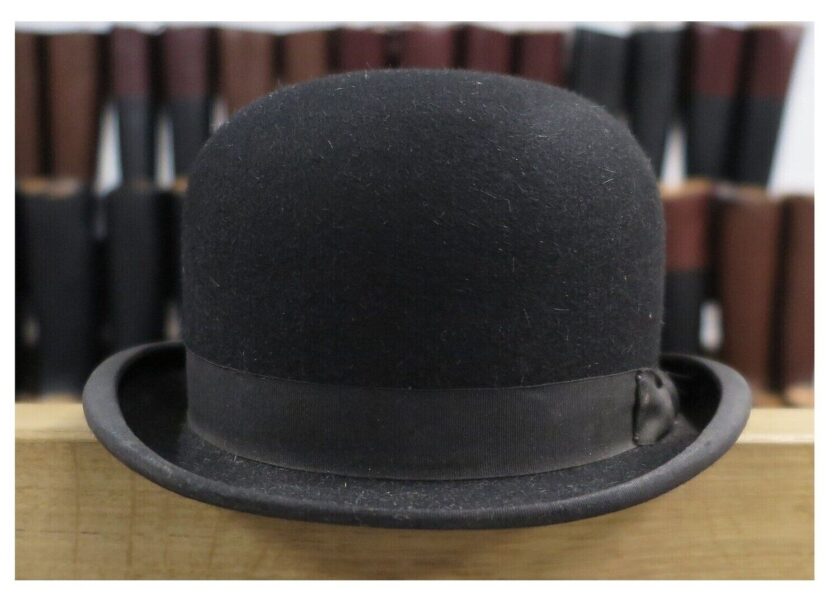
    This year marks the 175th anniversary of the bowler hat, one of the most iconic pieces of British fashion, and fittingly, its history is tied to Lock & Co., the world-renowned hatmakers located in St. James’s, London. Lock & Co., established in 1676, is the oldest hat shop in the world and the creator of the original bowler hat—a design that has become synonymous with British style, class, and even rebellion.

    The Birth of the Bowler Hat

    The story of the bowler hat begins in 1849 when Edward Coke, the younger brother of the 2nd Earl of Leicester, visited Lock & Co. with a request. He needed a hat that would protect the heads of gamekeepers from low-hanging branches while riding on horseback. Traditionally, gamekeepers wore top hats, which were too tall and impractical for such activities.

    Lock & Co.’s chief hatmaker, Thomas Bowler, took on the challenge and created a low-crowned, hard-felt hat that was both sturdy and stylish. The result was exactly what Edward Coke was looking for: a practical yet fashionable piece of headwear that offered protection and durability. When Coke tested the hat by stomping on it, it passed the test with flying colors—and the bowler hat was born.

    A Symbol of Britishness

    From its practical origins, the bowler hat quickly gained popularity, first among the upper classes and eventually throughout British society. By the late 19th and early 20th centuries, it had become a symbol of the British working man, favored by bankers, civil servants, and businessmen who wore the hat as part of their daily attire. The bowler was the hat of choice for anyone who wanted to present themselves as a man of authority and respectability.

    At the same time, it was adopted by the upper echelons of society, especially within the realms of the aristocracy and even royalty. The bowler hat’s versatility made it a favorite for formal occasions as well as everyday wear, helping it transcend class boundaries in a way few accessories ever have.

    The Bowler Hat in Popular Culture

    Over the years, the bowler hat has made countless appearances in popular culture, further solidifying its iconic status. From Charlie Chaplin’s comic character The Tramp, who donned a bowler in his silent film performances, to John Steed in the 1960s TV show The Avengers, the bowler became a symbol of wit, charm, and eccentricity. Its cultural significance extended beyond Britain’s borders, and it became an internationally recognized symbol of British identity.

    The hat was also featured in René Magritte’s famous surrealist paintings, such as The Son of Man, where the bowler represents a sense of anonymity and mystery. In the world of fashion, the bowler continues to be reimagined, maintaining its presence on runways and in street style around the globe.

    175 Years of Tradition at Lock & Co.

    The bowler hat may have evolved into a fashion icon, but its connection to Lock & Co. remains just as strong. As the creators of the original bowler, Lock & Co. has preserved the tradition and craftsmanship that went into designing the very first hat. Located at 6 St. James’s Street, Lock & Co. is a family-run business with over 300 years of experience in hatmaking, catering to everyone from British royalty to Hollywood celebrities.

    Each bowler hat made at Lock & Co. is handcrafted using traditional techniques, ensuring the highest level of quality and craftsmanship. The shop itself is a time capsule of British history, where customers can browse through centuries of hat-making legacy, including designs once worn by famous figures like Winston Churchill and David Beckham.

    To celebrate the bowler hat’s 175th anniversary, Lock & Co. has launched limited-edition versions of the hat, paying homage to the style that first made them famous. The anniversary collection includes hand-finished designs that reflect the timeless elegance and durability of the original bowler, still as relevant today as it was in 1849.

    A Legacy of British Style

    The bowler hat’s enduring appeal lies in its ability to adapt while remaining deeply rooted in British culture. Over its 175-year history, it has moved from practical headgear for gamekeepers to a symbol of power, respectability, and eccentricity. As Lock & Co. celebrates this milestone anniversary, the bowler continues to represent a unique blend of tradition and modernity, securing its place as a timeless British classic.

    If you ever find yourself in St. James’s, a visit to Lock & Co. is a must. Not only will you experience the shop’s rich history and impeccable craftsmanship, but you’ll also witness firsthand how the bowler hat has become one of the most enduring symbols of British style.